A print design service lets a growing team create brochures, packaging, event collateral and outdoor artwork without hiring a local agency for every job. The right provider works from your printer's specifications, builds production-ready files and keeps brand decisions consistent. You still own the printer relationship, legal checks and final physical proof.
The short answer: separate design from physical production
Print becomes expensive when teams treat design, printing and production as one vague task. They are separate responsibilities. A designer shapes the message, layout, hierarchy, imagery and artwork. A printer or fabricator advises on stock, substrate, inks, finishing, tolerances, manufacturing and unit cost. Your team approves copy, claims, quantities and the final proof. Clear ownership prevents a beautiful PDF from becoming an unusable physical object.
PitchWorx's print and packaging design service focuses on the design side: brochures, flyers, direct mail, packaging, catalogs, menus, event collateral, banners, billboards, vehicle wraps and other print-ready layouts. Physical printing, fabrication, shipping and installation stay with your chosen production partner. That division is useful for teams that already have trusted local or regional vendors but need reliable creative capacity.
What a print design service should include
- A brief that records the audience, message, call to action, quantity, deadline, final size and viewing distance.
- Layout concepts based on approved brand rules, copy, imagery and the way the piece will be handled or displayed.
- Brochure pagination, folds, panels, grids and reading order planned before decorative details are polished.
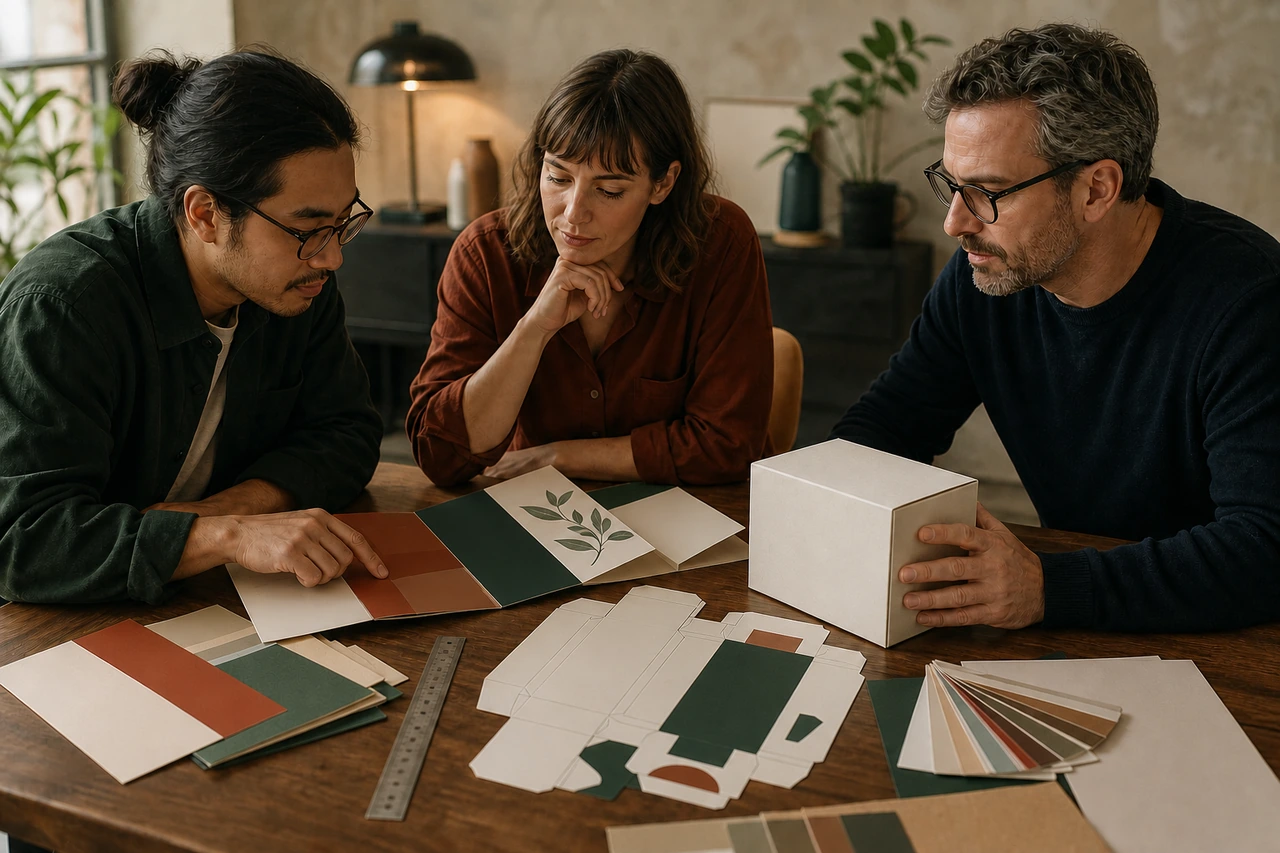
- Packaging artwork fitted to the printer's approved dieline, including safe areas, folds, glue zones and required panels.
- Color, image resolution, bleed, margins, fonts and export settings prepared for the specified production method.
- Realistic review mockups that help non-designers judge hierarchy and shelf or event presence before production.
- A preflight pass plus print-ready PDFs and editable source files where applicable.
Do not accept a generic promise of a print-ready PDF without defining the destination. Adobe's current InDesign printer-mark guidance says commercial jobs should be set up with the required bleed and slug space first, then exported with the marks the print provider expects. The provider's specification wins because different presses, cutters, materials and finishing processes have different requirements.
Brochure design and packaging design are not the same job
A brochure is an information system
The core brochure problem is sequence. A reader should understand who the offer is for, why it matters, what proves it and what to do next. Page count, fold pattern and copy length determine the design. Ask the writer and designer to agree on a page-by-page content map before layout begins. Late copy changes can add pages, break folds and force a new print quote.
Packaging is a physical and regulated surface
Packaging must work across flat artwork, a constructed object, a production line and a retail or delivery context. Start with the dieline supplied or approved by the manufacturer. Reserve space for product identity, required information, barcodes, batch or date coding, seals and any market-specific statements before the visual route is locked.
Barcode placement is not a cosmetic choice. GS1 US packaging placement guidance says placement should account for package edges, folds, flaps, damage risk and the printing process, with the packaging engineer and printer consulted. For regulated products, obtain qualified compliance review. For example, the FDA lists specific statements and panel locations for US dietary supplement labels; a designer should lay out approved content, not invent it.
Subscription, local agency or freelancer: choose by the risk
Choose a print design subscription when
- Your calendar contains recurring brochures, sales sheets, packaging variants, events and campaign updates.
- The brand needs to remain consistent across print, decks, web, social and video.
- Your team can supply approved copy, dimensions, dielines and printer requirements.
- Predictable monthly spend and an organized revision queue matter more than one isolated project quote.
Choose a local production agency when
- Material sourcing, structural packaging, prototypes, press checks or color-critical physical samples drive the project.
- The job includes fabrication, permits, site measurement, installation, fulfillment or shipping.
- A single high-risk launch needs one party contractually responsible for design through production.
Choose a specialist freelancer when
- The scope is contained, the format is familiar and one person's specialist style is central to the outcome.
- You can manage availability, feedback, backup coverage and printer handoff directly.
The cheapest option is the one that reaches an approved physical result with the fewest avoidable cycles. Compare the complete path: content readiness, concept work, revisions, version count, source files, preflight, proofing, production support and what happens when the printer changes a specification.
A six-step workflow that avoids expensive reprints
- Lock the job facts. Record final dimensions, quantity, material, print method, finishing, delivery date, market and vendor contact.
- Collect production inputs. Obtain the printer's template, dieline, bleed, safe-area, color-profile, image-resolution and PDF requirements.
- Approve content. Freeze the brochure map or packaging copy deck, including legal, nutrition, sustainability and barcode inputs supplied by qualified owners.
- Approve a visual direction. Review hierarchy and brand fit on a realistic mockup before every panel, page or size is built.
- Adapt and preflight. Create the required variants, inspect links and fonts, and check artwork against the latest vendor specification.
- Proof the physical result. Ask the printer for the appropriate digital, contract or physical proof and make one named person responsible for final approval.
Keep version names unambiguous. A filename such as product-market-size-v07-approved-for-proof is less elegant than final-final-2, but much safer. Record which dieline and copy deck were used, who approved the file and what proof was reviewed. That small audit trail becomes valuable when the next SKU, language or event size enters the queue.
Do not let the artwork make claims your team cannot support
Packaging often turns business claims into large, persuasive visual elements. That increases the need for evidence. The US Federal Trade Commission's Green Guides summary warns against broad, unqualified environmental claims and explains that recyclable, recycled-content and renewable-material statements may need specific qualifications. Route every regulated, health, performance and sustainability statement through the appropriate legal or compliance owner before it becomes part of the approved artwork.
How the PitchWorx queue works for print
PitchWorx Creative Assist is currently $699 per month with unlimited requests in the queue, two active at a time, unlimited revisions, unlimited team members, editable source files where applicable and no long-term contract. Most everyday requests receive a first delivery within about 72 hours. Larger brochures, packaging systems and outdoor campaigns move through planned milestones rather than one oversized request. Physical production and third-party costs remain separate.
Sequence the queue around dependencies. One active request can establish the brochure or packaging system while the second prepares the next campaign asset or adapts an already approved design. Do not produce every size before the core layout and printer proof are stable. A subscription saves time when approved choices are reused, not when the same unresolved decision is multiplied across twenty files.
Frequently asked questions
What does a print design service do?
A print design service creates visual layouts and production-ready artwork for physical formats such as brochures, packaging, flyers, catalogs, menus, event graphics, direct mail and outdoor advertising. It should work from the printer's requirements, prepare review mockups, manage revisions, preflight files and deliver the required PDF and editable source formats.
Does PitchWorx handle the actual printing?
No. PitchWorx focuses on design, mockups and print-ready files. Physical printing, materials, fabrication, shipping, installation and vendor coordination are not included by default. Your printer or production partner supplies the technical specification and produces the physical result, while PitchWorx prepares artwork to that specification.
Can a design subscription create packaging from a dieline?
Yes. Supply a current dieline approved by the manufacturer, plus the brand assets, copy, required statements, barcode files, finishes and reference products. The designer can create concepts, fit the approved route to the dieline, prepare mockups and export production files. Structural engineering, compliance approval and physical testing remain specialist responsibilities.
What files should I send for brochure design?
Send approved copy organized by page or panel, logo and brand guidelines, high-resolution images with usage rights, charts or data sources, final dimensions, fold or binding details, printer specifications, reference examples, deadline and a named approver. State whether you also need an accessible digital PDF or web version, because that changes the export plan.
What is a print-ready file?
A print-ready file is an export prepared for a specific vendor and production method. It uses the correct final size, bleed, safe areas, color handling, image resolution, fonts, pages or panels and PDF settings. It is not universally ready for every printer. The receiving vendor should still preflight it and supply the appropriate proof before production.
How long does brochure or packaging design take?
Timing depends on content readiness, page or panel count, concept exploration, dieline status, variants, compliance review and feedback speed. A simple update can move quickly. A new packaging family or long brochure needs several milestones. PitchWorx delivers most everyday first drafts within about 72 hours, while larger print projects are scheduled in stages.
How much does the PitchWorx print design service cost?
Creative Assist is currently $699 per month. It includes print design alongside presentation, brand, marketing, web, motion, editorial and illustration work, with two active requests and unlimited queued requests and revisions. Printing, fabrication, shipping, installation and other third-party production costs are separate.
Build one brand system for every physical touchpoint
A brochure should not look like one company while the carton, event booth, sales deck and landing page look like four others. Reuse approved typography, image direction, hierarchy, claims and production lessons across the system. The result is not only more consistent. Each following request starts with fewer unresolved choices and a clearer path to proof.
PitchWorx can handle the brochure, packaging artwork, event collateral, brand system, sales deck, campaign graphics, landing page and supporting illustrations inside one prioritized workflow for $699 per month. One subscription does all of this. Explore the print and packaging design service.