
A fundable pitch deck follows an 11-slide structure: Title, Problem, Solution, Product, Market Size, Business Model, Traction, Competition, Team, Financials, and The Ask. Each slide answers one investor question in order, building a single narrative from why-now to how-much. Ten to fifteen slides is the norm for a seed or Series A raise.
Why structure decides the raise
Investors see hundreds of decks a quarter. They read fast, in a fixed order, looking for specific answers. When your slides arrive in the sequence they expect, each question gets answered right as it forms in their mind, and the deck feels effortless. When the order is scrambled, they work to reassemble your story, and confidence drops before the numbers even land.
The 11-slide structure below is the convention for seed and Series A decks in 2026. It is not rigid law, but it is the baseline investors are pattern-matching against. Treat it as the default, and deviate only with a reason.
The 11 slides investors expect
Each slide exists to answer one question, in this order:
- Title: who are you and what do you do, in one line?
- Problem: what painful, real problem exists?
- Solution: how do you solve it, clearly?
- Product: what does it actually look like?
- Market Size: how big is the opportunity?
- Business Model: how do you make money?
- Traction: what proof is it working?
- Competition: why you, versus the alternatives?
- Team: why are you the ones to win?
- Financials: what do the numbers project?
- The Ask: how much, and what for?
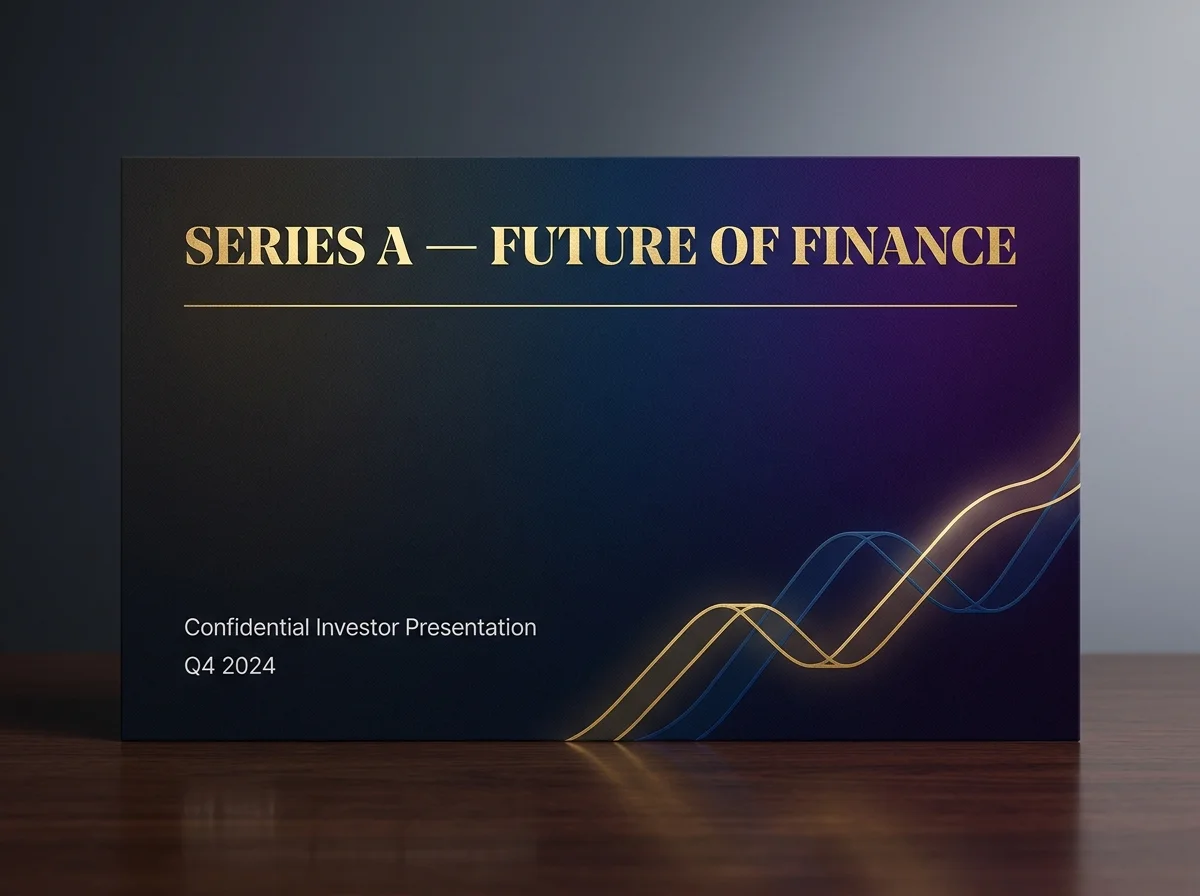
1. Title
One clean slide: company name, a one-line description a stranger would understand, and your contact. This sets the tone. A crisp, confident opener signals a crisp, confident company.
2. Problem
Name a real, painful problem and who has it. Make the investor feel the pain before you pitch a cure. Specificity beats grand abstractions here, a concrete problem is believable.
3. Solution
State how you solve the problem, plainly. This is not the place for a feature list. It is the single clear idea that connects directly back to the pain you just described.
4. Product
Show it. Screenshots, a simple diagram, or a short flow of how it works. Investors trust what they can see far more than what they are told. Keep it visual, not text-heavy.
5. Market Size
Frame the opportunity honestly, ideally bottom-up. Investors are wary of inflated top-down numbers. Show the reachable market and a credible path to expand it. This slide proves the prize is worth the risk.
6. Business Model
Explain how you make money in one clean view: what you charge, to whom, and why it scales. Clarity here reassures investors the venture can become a real business, not just a good product.
7. Traction
The most persuasive slide in the deck. Show growth, revenue, users, retention, or signed pilots, whatever proves momentum. A clear up-and-to-the-right chart does more than paragraphs of promise. If you have real traction, make it unmissable.
8. Competition
Acknowledge alternatives honestly, then show your durable edge. A 2x2 or a simple feature matrix works well. Claiming you have no competition reads as naive, so map the landscape and stake your position.
9. Team
Why are you the team to win this? Highlight founder-market fit, relevant experience, and key hires. Early-stage investors bet on people as much as ideas, so make the case that you specifically can execute.
10. Financials
A three-year projection with the assumptions behind it. Investors know early forecasts are estimates, but the slide reveals how you think about growth, costs, and the path to scale. Keep it legible: a few key lines, not a spreadsheet dump.
11. The Ask
Close by stating exactly how much you are raising and what it unlocks: the milestones the money funds and the runway it buys. Vagueness here undercuts everything before it. A clear ask signals a founder who knows their plan.
Structure is necessary, design makes it land
Getting the 11 slides in order is the foundation. But the same content can either build conviction or leak it, depending on how it is designed. Cluttered data, inconsistent type, and weak visual hierarchy make investors work, and working readers disengage. Strong presentation design does the opposite: it guides the eye, makes numbers instantly readable, and makes a startup look like it operates with the same care investors expect of a portfolio company.
That is why the highest-stakes decks are worth specialist design. PitchWorx leads pitch deck design with a team carrying 13+ years designing decks for Fortune 500 brands, turning a correct structure into a persuasive one. A flat design subscription means the deck, and every asset around the raise, comes from one senior team at a predictable flat ${P}/mo.
Frequently asked questions
How many slides should a pitch deck have?
Ten to fifteen for a seed or Series A raise, with eleven as a reliable default. The goal is one clear idea per slide, not padding the count.
What is the standard pitch deck structure?
Title, Problem, Solution, Product, Market Size, Business Model, Traction, Competition, Team, Financials, and The Ask, in that order. Each slide answers one investor question as it arises.
What is the most important slide in a pitch deck?
Traction, when you have it. Proof that the product works and is growing is the strongest signal an investor can see. Team and Problem come next.
Can I change the slide order?
Yes, with a reason. The sequence above matches how investors read, so deviate deliberately, for example leading with traction if it is exceptional, not by accident.
How long should an investor spend on my deck?
Often just three to five minutes on a first pass. That is why order and visual clarity matter so much: the right answer must be obvious at a glance.
Should I design the deck myself or hire a specialist?
For low-stakes internal decks, do it yourself. For a raise, specialist design measurably improves clarity and credibility, which is why the PitchWorx deck team is led by senior specialists.
Ready to build a fundable deck? Start with our pitch deck design service, or see the full design subscription for startups at a flat $699/mo.