Quick Answer
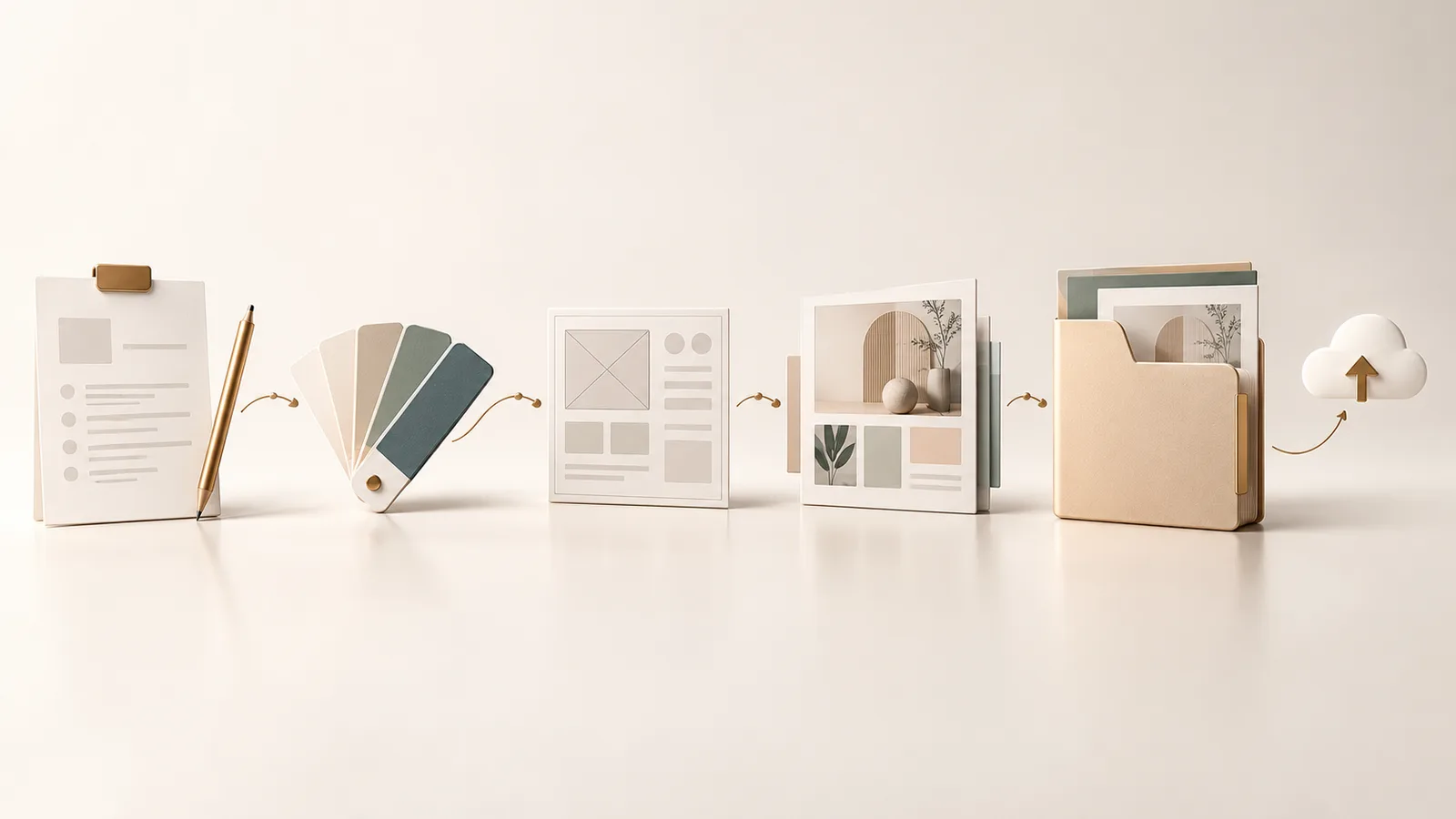
A monthly graphic design package replaces per-project invoices with one flat fee and a request queue. You write a brief, it joins the queue, the team works a fixed number of requests at a time, you review and send revisions, and you receive editable source files you own. Four stages, repeating every week. Most plans return a first draft in 24 to 72 hours and allow unlimited revisions. The thing that decides your real output is not the word unlimited; it is how many requests the team works on at once. PitchWorx Creative Assist runs two, at $699 a month.
Table of Contents
- The four stages, in order
- Stage 1: the brief
- Stage 2: the queue
- Stage 3: revisions
- Stage 4: handoff
- Active vs unlimited requests
- How the PitchWorx plan works
- Service categories covered
- Pricing compared
- Case study
- Market growth and the PitchWorx vision
- FAQs
The four stages, in order
Every Monthly graphic design package runs the same loop: brief, queue, revisions, handoff. What separates a plan that works from one that frustrates you is how well you use each stage. Most waste sits in stages one and three, and both are under your control.
Stage 1: the brief
A brief is the request you submit. It decides everything downstream, because a designer works only from what you wrote.
What a usable brief contains: what it is for, who sees it, where it appears, the exact copy, logo or image files, the size or format, and one example you like.
Hacks that save the most time:
- Send final copy, not placeholder text. Rewriting text after layout causes more extra rounds than anything else.
- Name the output format. A LinkedIn carousel, a 16:9 deck and a printed flyer are three different jobs.
- Link one reference and say why. "This one, because of the spacing" beats twenty screenshots.
- Split big asks. A brand refresh plus a deck in one brief block your slot for a week. Two briefs move faster.
- Write it once, reuse it. Keep a template per recurring format. Most small teams need three or four.
A strong brief beats every other hack here. Teams that write them well get far more from the same monthly graphic design package, whether the request is a deck, a logo or a marketing design subscription asset like an ad set.
Stage 2: the queue
The queue is where submitted briefs wait. Add as many as you like, and the team pulls from the top.
Hacks for the queue:
- Reorder it weekly. Put the deadline-driven item on top every Monday. Most dashboards allow it and few clients bother.
- Keep it stocked. An empty queue wastes capacity you already paid for. If a slot frees and nothing waits, that time is gone.
- Batch similar work. Six social creatives in one request beat six separate ones, because the designer builds one system and applies it.
- Front-load the month. Submit heavy work in week one so revisions land in the same billing month.
Stage 3: revisions
Revisions are where the calendar disappears. Unlimited revisions are genuinely useful, but each round still costs a day or two.
Hacks that cut revision rounds:
- Collect all feedback before sending any. Three separate emails become three separate turnarounds.
- Point at the thing. "Headline on slide 4 is too small" is actionable. "Feels off" is not.
- Separate preference from error. Mark must-fix against nice-to-have, so the designer knows what to protect.
- Approve in stages. Layout, then colour, then copy. Reopening layout after a colour pass restarts the work.
- Cap it at three rounds. Teams that hold this line ship far more often than teams that keep polishing.
Stage 4: handoff
Handoff is where you receive the work. Buyers check it least, and it matters most a year later.
What to confirm before you subscribe anywhere:
- Editable source files, not just exports. PowerPoint, Keynote, Google Slides, Figma, PSD or AI. A flattened PDF is not something you can build on.
- Written ownership. Under US and UK law a commissioned design belongs to the designer unless a signed agreement transfers it.
- Font and stock licensing. Both are licensed, never owned, so ask which libraries the team uses.
- What happens when you cancel. Everything delivered should remain yours.
PitchWorx hands over editable source files on every request, and you keep everything delivered if you cancel. For PowerPoint design services that means a .pptx with live text and real chart objects, not slides exported as images. Good PowerPoint design services are judged at handoff, not at first draft.
Active vs unlimited requests
This is the term small business owners misread most often.
Unlimited means no cap on how many requests you add to the queue each month. Active means how many the team works on at the same time.
PitchWorx runs two active requests. When one is delivered, the next starts, so 25 queued requests move through two at a time. Any marketing design subscription that advertises unlimited without naming its active count is telling you half the story.
How the PitchWorx plan works
PitchWorx started in 2012 as a presentation design company and brings 13 years of experience in the design industry, with over 150,000 slides designed for more than 500 brands including Wipro, Samsung, Honeywell, PepsiCo and Caterpillar. The studio is ISO 27001:2022 certified.
- Start a 7-day free trial with a real brief.
- Onboarding week: the team builds your template, colors, type and masters.
- Submit requests through the dashboard, no limit on team members.
- Most requests return in about 72 hours, AI first pass, senior review.
- Unlimited revisions, and you own the editable source files.
- Cancel anytime, no contract.
Service categories covered
One monthly graphic design package covers eight categories:
- Presentation design: pitch decks, sales decks, board presentations, through a dedicated deck team
- Branding design: logos, brand identity, guidelines and refreshes
- Marketing design: social creatives, ads, email graphics, landing page visuals
- Creative design: illustration and infographics
- Web design and development: websites, landing pages, microsites
- Video and motion: explainers, logo animation, reels
- Print and outdoor: brochures, packaging, signage
- Books and magazines: layouts and annual reports
Because decks go to their own team, PowerPoint design services never queue behind a social banner. That separation is the main reason founders pick this monthly graphic design package over a general marketing design subscription.
Pricing compared
Creative Assist is $699 per month, flat, for US and UK clients.
| Option | Starting monthly price (2026) |
|---|---|
| Penji | $999 |
| ManyPixels | $899 |
| PitchWorx Creative Assist | $699 |
| Flocksy | $1,199 |
| Kimp (Graphics) | $1,397 |
| Superside | about $5,000 |
| US in-house designer | $5,000+ (over $60,000 a year before benefits) |
Upwork lists presentation designers at $35 to $60 an hour, and 24Slides charges $43 per slide for a redesign. A 40-slide deck costs $1,720 at that rate, more than two months of the plan.
Teams needing more output move to a custom plan, which adds active slots, a dedicated designer, multi-brand workflows and larger video or web production. Ownership terms are identical on both.
Case study
PitchWorx's published client results include:
- A Boston medical device manufacturer recorded a 41% increase in sales conversion rate after rolling out redesigned product presentations.
- A New York investment firm reported client retention up 28% after its quarterly review decks were redesigned.
- A 22-slide Series A deck, rebuilt with a clear hook, evidence and ask, helped close the round within nine weeks.
In each case the client kept the editable files, so their own team could update figures later without raising a new request. That is the handoff stage doing its job.
Market growth and the PitchWorx vision
Mordor Intelligence values the global graphic design market at $59.29 billion in 2026, rising to $85.53 billion by 2031, a 7.6% annual growth rate, and credits AI-assisted production for making flat-fee plans viable.
Chart note: plot the market curve 2026 to 2031 at 7.6% CAGR ($59.3B, $63.8B, $68.6B, $73.9B, $79.5B, $85.5B) and a bar chart of the pricing table, PitchWorx highlighted.
PitchWorx runs its subscription and custom model across the USA, UK, UAE and India. The vision is one design partner, one flat price, and files the client owns outright, whether you are a four-person team in Leeds or a marketing department in Denver.
FAQs
How does a monthly graphic design package actually work?
You submit briefs to a queue, the team works a fixed number at a time, you review and request revisions, and you receive editable source files. The loop repeats every month.
How long does one request take?
Most come back in about 72 hours. Full websites and video run longer, in stages.
What do unlimited revisions really mean?
No cap on rounds. Each round still costs a day or two, so consolidating feedback is what speeds delivery.
Do I own the files?
With PitchWorx, yes, including editable source files, and you keep everything delivered if you cancel. Always confirm this in writing anywhere you subscribe.
Can one plan cover decks and social content?
Yes. One monthly graphic design package covers presentation, branding, marketing, creative, web, video, print and publication work, with decks routed to a separate team.
Is there a free trial?
Yes, 7 days. Send a real brief and judge the output before subscribing.